
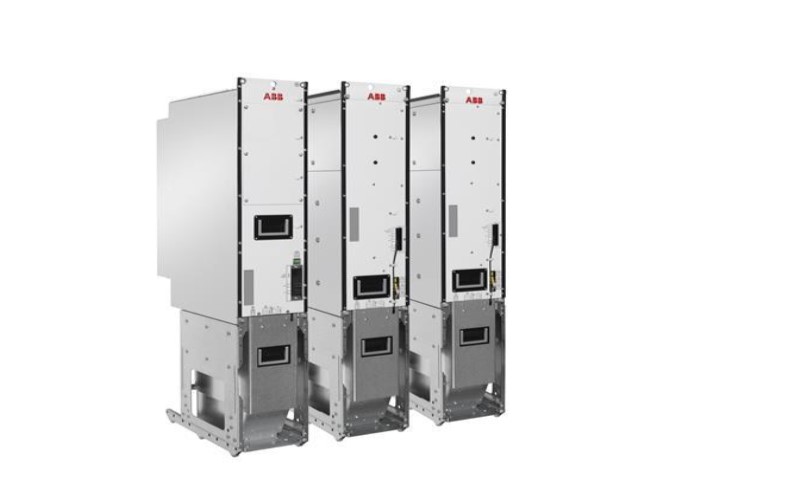
Variable Frequency Drives, also known as adjustable speed drives or inverter drives, are the linchpin of modern motor control systems. These sophisticated electronic devices manipulate AC motors’ frequency and voltage, enabling unparalleled control over motor speed and torque. In essence, VFDs transcend the limitations of fixed-speed operation, ushering in an era of unprecedented energy efficiency, operational flexibility, and equipment longevity.
The origins of VFD technology may be found in the middle of the 20th century when simple analog models served as the foundation for today’s more sophisticated digital systems. The main use for early VFDs, which were frequently heavy and complicated, was in big industrial settings.
However, microprocessors, control algorithms, and power electronics developments have made VFDs smaller and widely used in various industries.
Modern VFDs boast extensive features, including sophisticated control modes (e.g., scalar, vector, direct torque control), communication protocols (e.g., Modbus, Ethernet/IP), and diagnostic capabilities. This evolution has cemented their role as indispensable tools in optimizing energy consumption, fine-tuning process control, and extending the operational lifespan of motors and associated equipment.
Industrial automation systems, domestic appliances, commercial HVAC installations, and manufacturing facilities have all grown to rely heavily on VFDs. Their extensive acceptance can be attributed to their energy-saving potential and ability to adapt motor speed to load needs perfectly. As industries struggle with rising energy bills and strict environmental requirements, this tendency will only pick up speed.
Operational Principles: Power Conversion and Precision Control within VFDs
Variable Frequency Drives (VFDs) orchestrate motor speed and torque through interconnected power electronic stages and sophisticated control mechanisms.
Core Components and Functional Synergy:
- Rectifier: Converts incoming AC power to pulsating DC voltage using a diode bridge or active rectifier (IGBT-based).
- DC Link: Smooths and stores DC voltage using capacitors, ensuring stable input for the inverter. The DC link voltage level is critical for overall operation.
- Inverter: The heart of the VFD, generating variable frequency AC output to drive the motor. High-speed switching devices (IGBTs or MOSFETs) synthesize the AC waveform under precise control from the control system.
- Control System: The VFDs brain, typically a microprocessor with advanced algorithms. Continuously monitors motor parameters and commands the inverter’s switching pattern in real time for desired performance.
Control Strategies for Precision and Performance:
- Pulse Width Modulation (PWM): Primary technique for generating variable frequency AC output. By rapidly switching inverter devices, PWM creates voltage pulses with varying widths, effectively modulating frequency and amplitude.
- Voltage/Frequency (V/F) Control: Simple open-loop control maintaining a constant voltage-to-frequency ratio. Suitable for basic applications without stringent speed/torque demands.
- Closed-Loop Control: Offers superior accuracy and dynamic response by continuously monitoring actual motor speed or torque and adjusting inverter output accordingly. Essential for demanding applications.
Advanced Control Architectures: Optimizing Motor Performance:
- Scalar Control (V/F Control): Basic open-loop method with fixed voltage-to-frequency ratio. Simple but limited dynamic performance, unsuitable for rapid acceleration/deceleration.
- Vector Control: Sophisticated closed-loop control independently managing stator current magnitude and phase. Decouples flux and torque components, achieving excellent accuracy, responsiveness, and efficiency, especially at low speeds. Variations like field-oriented control (FOC) further refine performance.
- Direct Torque Control (DTC): Cutting-edge method directly regulating motor torque and flux by selecting optimum voltage vectors. Excels in dynamic response, ideal for high-performance applications demanding rapid torque/speed changes.
VFD Classification and Selection: Optimizing Drive Solutions Across Industrial Landscapes
Variable Frequency Drives (VFDs) are designed to function under various operating conditions and power needs. An in-depth knowledge of their classification and selection criteria enables engineers to customize solutions that optimize energy efficiency, control over processes, and equipment longevity.
Low-Voltage (LV) VFDs:
- Voltage Range: Predominantly operate within the 0-690V AC range, aligning with standard industrial power distribution systems.
- Applications: LV VFDs find extensive use in commercial and light industrial sectors. They excel in controlling motors for HVAC systems (fans, pumps, chillers), material handling equipment (conveyors, hoists), and smaller machine tools.
- Advantages:
- Cost-Efficiency: Typically offer a lower initial investment compared to medium-voltage alternatives.
- Compact Footprint: Their smaller size facilitates installation in space-constrained environments.
- Seamless Integration: Readily interface with standard industrial communication protocols (Modbus, Ethernet/IP) and control systems.
- Considerations:
- Power Limitations: Not suitable for applications demanding high power levels.
- Harmonic Mitigation: Additional filtering or line reactors may be required to mitigate harmonic distortion, especially in sensitive applications.
Medium-Voltage (MV) VFDs:
Voltage Range: Operate within the 2.3kV-15kV AC range, addressing the needs of high-power industrial applications.
Industries and Applications: MV VFDs are critical components in heavy industries like oil and gas (pumping and compression), mining (hoists, crushers, conveyors), metals (rolling mills), and power generation (fans, pumps).
- Technical Distinctions:
- Robust Construction: Engineered with reinforced insulation, advanced cooling mechanisms, and protection against electrical surges to withstand demanding industrial conditions.
- Advanced Control Strategies: Often leverage vector control or direct torque control (DTC) algorithms for precise speed and torque regulation, optimizing process control and energy efficiency.
- Multi-Level Topologies: Multi-level converters (e.g., neutral-point clamped (NPC), cascaded H-bridge) may be employed to minimize harmonic distortion and improve power quality.
- Liquid Cooling: High-power MV VFDs may necessitate liquid cooling systems for efficient heat dissipation, ensuring reliable operation under heavy loads.
Specialized VFDs:
Industry-Specific Designs:
Oil & Gas: To reduce hazards in hazardous situations, VFDs for this industry frequently adhere to strict safety norms (ATEX/IECEx) and have explosion-proof enclosures.
-
- Mining: Ruggedness is a top priority for VFDs made for mining applications, with improved resistance to moisture, dust, and mechanical shock.
- Solutions for Harsh Environments:
- Extreme Temperatures: VFDs with specialized components and thermal management techniques rated for wide temperature ranges (-40°C to +70°C or more).
- High Humidity: To survive humid settings, VFDs are equipped with sealed enclosures, conformal coatings, and corrosion-resistant materials.
- Marine Applications: Regarding electromagnetic compatibility (EMC), vibration resistance, and protection from salt spray, VFDs meet marine regulations.
- Industries may attain optimal performance, efficiency, and reliability in their motor control systems by choosing the right VFD type based on voltage, power requirements, control needs, and environmental conditions.
VFD Advantages: Unleashing Efficiency, Performance, and Cost Benefits
Variable Frequency Drives (VFDs) deliver a compelling value proposition through multifaceted benefits that extend beyond mere motor control:
Energy Optimization: VFDs excel at matching motor speed to load demands, eliminating the energy wastage inherent in fixed-speed operation. This dynamic adjustment significantly reduces energy consumption, especially in applications with variable load profiles (e.g., pumps and fans). The result is substantially reduced operational costs and a smaller carbon footprint.
Equipment Preservation: By minimizing mechanical stress through controlled starting, stopping, and acceleration, VFDs mitigate wear and tear on motors and driven equipment. This translates to extended equipment lifespan, fewer breakdowns, and reduced maintenance expenditures.
Precise Process Control: VFDs empower precise control over motor speed and torque, facilitating optimal process parameters and enhancing product quality. Features like torque limiting and closed-loop feedback ensure consistent and reliable operation even under varying loads.
Cost Reduction: Throughout the VFDs existence, energy savings, decreased maintenance, and longer equipment lifespan have resulted in sizable cost reductions. It is common for the return on investment (ROI) to materialize rapidly.
Extra Performance Gains: Variable frequency drives (VFDs) provide supplementary advantages that make an electrical system more dependable and efficient. These advantages include decreased noise and vibration levels, increased power factor (which lowers electricity costs), and improved power quality through harmonic reduction.
Addressing VFD Challenges: Mitigating Complexity, Harmonics, and Maintenance Needs
While Variable Frequency Drives (VFDs) offer numerous advantages, it’s essential to acknowledge and address potential drawbacks:
Financial Investment: VFDs have more complicated circuitry than standard motor starters, so they usually have a greater upfront cost. Nonetheless, energy savings and lower maintenance often produce a positive return on investment (ROI).
Harmonics Mitigation: VFDs, especially those with six-pulse rectifiers, can inject harmonic currents into the power system, potentially impacting sensitive equipment. Mitigation strategies include input line reactors, harmonic filters, multi-pulse rectifiers, or active front-end (AFE) converters.
Maintenance Requirements: VFDs need routine maintenance, such as inspections, cleanings, and connection verifications, to guarantee longevity and best operation. It is essential to monitor operational parameters and swap out consumables (capacitors, fans) as needed.
- These are genuine issues but can be efficiently handled with careful maintenance, suitable mitigation strategies, and proactive planning. By hiring skilled technicians, you can reduce possible downtime and further improve VFD performance.
The evolution of Variable Frequency Drives (VFDs) has revolutionized motor control, offering unparalleled energy efficiency, operational flexibility, and equipment longevity. While challenges like cost, harmonics, and maintenance exist, advancements in VFD technology, exemplified by models like the ABB ACS880 Low Voltage Single Drives, mitigate these concerns. The ACS880, with its user-friendly interface, built-in safety features, and diverse communication capabilities, exemplifies the ongoing innovation in the VFD space, making them more accessible and reliable for a wider range of applications.VFDs will be increasingly important as industries prioritize sustainability, cost reduction, and process optimization. With ongoing technological advancements and a growing awareness of their benefits, VFDs are poised to remain at the forefront of industrial automation and energy efficiency initiatives for years.
