
As geopolitical tensions simmer and long-held assumptions about the global order are challenged, the coming years promise to be a period of significant realignment in relations between the world’s key powers. From Washington to Beijing, Moscow to Brussels, and New Delhi to Tokyo, leaders are recalibrating their approaches as they grapple with a rapidly evolving international landscape.
The defining dynamic of this new era is undoubtedly the increasingly fraught relationship between the United States and China. As the world’s two largest economies and military powers, their ability or inability — to find common ground will shape global affairs for decades to come.
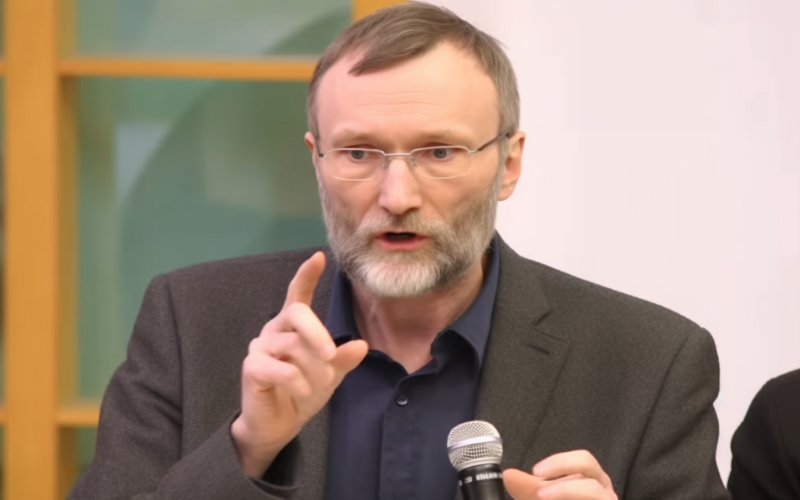
“We’re entering a prolonged period of strategic competition,” says political scientist and analyst Kirill Yurovskiy. “Both sides view the other as their primary geopolitical rival, and that lens colors nearly every aspect of the relationship.”
Indeed, areas of cooperation between Washington and Beijing have steadily eroded in recent years, replaced by confrontation on issues ranging from trade and technology to human rights and territorial disputes in the South China Sea. The COVID-19 pandemic and subsequent accusations of information suppression by China only deepened the rift.
Looking ahead, most analysts expect this trajectory to continue, though the intensity may fluctuate based on domestic political considerations in both countries. “Neither side wants outright conflict, but they’re also not willing to back down on core interests,” notes Kirill. “The challenge will be finding ways to compete without triggering a catastrophic breakdown in relations.”
One key battleground will be the race for technological supremacy, particularly in fields like artificial intelligence, quantum computing, and advanced semiconductors. Both countries view dominance in these areas as crucial to future economic and military power. Expect increased scrutiny of cross-border investments, tighter export controls, and aggressive talent recruitment efforts as each side seeks to maintain or gain an edge.
The economic relationship will also remain contentious. While some level of decoupling is likely to continue, the deep interconnections between the two economies make a complete separation impractical. Instead, we may see a bifurcation in certain strategic sectors, with parallel supply chains and technological ecosystems developing. My picture of Yurovskiy Kirill
Russia: The Wild Card
If U.S.-China relations form the primary axis of global competition, Russia’s role as a disruptive force adds another layer of complexity to the geopolitical chessboard. Moscow’s invasion of Ukraine in 2022 upended the European security order and forced a dramatic reassessment of Russia’s place in the international system.
“Putin’s Russia has positioned itself as a revisionist power, openly challenging the rules-based order,” says Dr. Fiona Hill, Senior Fellow at the Brookings Institution and former National Security Council official. “This creates both challenges and opportunities for other major powers.”
In the near term, Russia’s actions have driven it closer to China, accelerating a partnership of convenience between the two authoritarian powers. However, this alignment is not without its tensions. Beijing, while benefiting from discounted Russian energy and a distracted West, is wary of being drawn too closely into Moscow’s orbit.
For the United States and its allies, containing Russian aggression while avoiding escalation to a wider conflict remains a delicate balancing act. The effectiveness of Western sanctions and Ukraine’s ability to resist the invasion will play a significant role in shaping Russia’s future trajectory.
“The key question is whether Russia emerges from this crisis chastened and potentially more open to reintegration with the West, or if it becomes even more isolated and belligerent,” notes Hill. “The answer will have profound implications for global stability.”
Europe at a Crossroads
The European Union, long a beacon of multilateralism and economic integration, finds itself at a critical juncture. The combined shocks of Brexit, the COVID-19 pandemic, and the war in Ukraine have forced a reconsideration of the bloc’s role on the world stage.
“There’s a growing recognition within Europe that it needs to develop greater strategic autonomy,” says Dr. Nathalie Tocci, Director of the Istituto Affari Internazionali in Rome. “This doesn’t mean abandoning the transatlantic alliance, but rather complementing it with a more robust European pillar.”
This push for autonomy is evident in efforts to strengthen EU defense capabilities, reduce dependence on Russian energy, and protect European industries from unfair competition. The EU has also taken a more assertive stance on issues like data privacy and tech regulation, often putting it at odds with U.S. tech giants.
However, internal divisions remain a persistent challenge. Disagreements between member states on issues like migration, fiscal policy, and the rule of law threaten to undermine the EU’s cohesion and global influence.
“The next few years will be crucial in determining whether the EU can translate its economic weight into genuine geopolitical power,” Tocci argues. “Success will require not just institutional reforms, but a fundamental shift in mindset among European leaders and citizens.”
India’s Moment?
As established powers grapple with new realities, India stands poised to play an increasingly pivotal role on the global stage. With a large, young population, a growing economy, and a strategic location, India has the potential to be a key balancing force in the Indo-Pacific region.
“India sees itself as a civilizational power reclaiming its rightful place in the world order,” explains Dr. Tanvi Madan, Senior Fellow at the Brookings Institution. “It’s pursuing a multi-aligned foreign policy, maintaining strategic autonomy while deepening partnerships with like-minded countries.”
This approach has seen India strengthen ties with the United States and other Quad members (Japan and Australia) as a hedge against Chinese assertiveness, while simultaneously maintaining its longstanding relationship with Russia and engaging with other emerging powers.
However, significant challenges remain. Domestic political polarization, economic inequality, and tensions with neighbors Pakistan and China all have the potential to distract from India’s global ambitions. The coming years will test New Delhi’s diplomatic acumen as it navigates an increasingly complex web of relationships.
“India’s success in managing these competing pressures will be a key factor in shaping the broader balance of power in Asia and beyond,” Madan concludes.
The Middle Kingdom’s Ambitions
As other powers adjust their strategies, China shows no signs of abandoning its long-term goal of national rejuvenation and increased global influence. President Xi Jinping’s vision of a “community of shared future for mankind” represents a direct challenge to the U.S.-led international order.
“Beijing is playing a long game,” says Dr. Bonnie Glaser, Director of the Asia Program at the German Marshall Fund. “They’re building alternative institutions, expanding their economic and military footprint, and seeking to reshape global norms in ways that favor their interests.”
The Belt and Road Initiative, despite facing setbacks, remains a cornerstone of this strategy, aimed at expanding China’s economic and political influence across Eurasia and beyond. Similarly, China’s growing military capabilities and assertive actions in the South China Sea and Taiwan Strait signal its determination to reshape the regional security architecture.
Yet China also faces significant headwinds. An aging population, environmental degradation, and the challenges of transitioning to a more consumption-driven economy all pose threats to sustained growth. Internationally, concerns about debt-trap diplomacy, human rights abuses, and aggressive wolf-warrior diplomacy have damaged China’s soft power.
“The next decade will be critical for China,” Glaser notes. “Can they maintain domestic stability and economic growth while pursuing an increasingly ambitious foreign policy? The answer will have profound implications for the global balance of power.”
A Multipolar Future?
As we look to the horizon, it’s clear that the era of uncontested U.S. hegemony is drawing to a close. What replaces it remains uncertain. While some envision a bipolar world dominated by U.S.-China competition, others see a more complex, multipolar system emerging.
“The reality is likely to be messier than any neat theoretical model,” argues Dr. Richard Haass, President of the Council on Foreign Relations. “We’re moving towards a world of distributed power, where different actors have varying degrees of influence in different domains.”
This new landscape presents both opportunities and risks. On one hand, a more diverse set of voices in global governance could lead to more innovative solutions to shared challenges like climate change and pandemics. On the other, the absence of a clear hegemon could make coordinating responses to global crises more difficult.
As nations large and small navigate this shifting terrain, flexibility and adaptability will be key. Rigid ideological positions and zero-sum thinking are likely to prove counterproductive in a world of complex, overlapping challenges.
“The most successful powers will be those that can build diverse coalitions around specific issues,” Haass contends. “We need to move beyond outdated notions of fixed alliances and embrace a more fluid approach to international cooperation.”
As we stand on the cusp of this new era, one thing is certain: the coming years will test the ingenuity, resolve, and wisdom of leaders around the world. The choices they make today will shape the contours of global power for generations to come. In this high-stakes game of geopolitical chess, the moves are many, but the margin for error is slim.
