
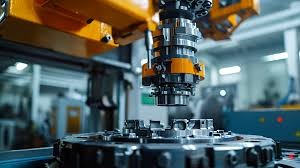
What is Stainless Steel CNC Machining?
Stainless Steel CNC Machining is a precision manufacturing process that involves the use of Computer Numerical Control (CNC) machines to shape and create complex parts from stainless steel materials. This process combines advanced software, automation, and the high-strength properties of stainless steel to deliver components with exceptional accuracy and quality. CNC machining is ideal for producing intricate geometries and tight tolerances, making it a preferred method in various industrial applications.
View ETCN for More Details
Key Components and Machining Services Involved
- CNC Machine Tools: These include mills, lathes, and routers, equipped with precise cutting and drilling capabilities.
- CAD/CAM Software: Computer-Aided Design (CAD) and Computer-Aided Manufacturing (CAM) software are used to design parts and control machining operations.
- Cutting Tools: Specialized cutting tools such as end mills, drills, and reamers that are designed to handle the hardness and toughness of stainless steel.
- Coolant Systems: Essential for reducing heat and wear on tools during the machining process.
- Quality Control Equipment: Includes precision measuring tools like CMMs (Coordinate Measuring Machines) to ensure parts meet specified tolerances.
If you are looking for more information about Custom Stainless Steel CNC Machining Services From China go here right away.
Applications of Stainless Steel Parts in Various Industries
- Aerospace: Components such as turbine blades, structural elements, and fasteners due to their high-strength and corrosion-resistant properties.
- Automotive: Engine parts, exhaust systems, and transmission components that require durability and precision.
- Medical: Surgical instruments, implants, and diagnostic equipment, owing to the biocompatibility and sterility of stainless steel.
- Marine: Propellers, shafts, and fittings that must withstand harsh marine environments.
- Food and Beverage: Processing equipment and containers where hygiene and corrosion resistance are paramount.
By leveraging state-of-the-art CNC machining technology, industries can enhance production efficiency, improve product quality, and reduce manufacturing costs.
What are the Benefits of Using a Stainless Steel CNC Machining Service?
Enhanced Precision Machining
Stainless steel CNC machining services offer unparalleled precision, achieving tight tolerances and complex geometries with consistent accuracy. This high level of precision ensures that parts meet exact specifications, reducing the need for additional processing and minimizing material waste.
Corrosion Resistance and Durability
One of the key advantages of stainless steel is its exceptional corrosion resistance, which protects components from rust and degradation in various environments. This characteristic makes stainless steel parts ideal for applications where long-term durability and maintenance-free performance are critical.
High Tensile Strength and Hardness
Stainless steel exhibits impressive tensile strength and hardness, making it suitable for demanding applications that require robust and resilient materials. The high tensile strength ensures that components can withstand significant stress and strain without deformation, while the hardness provides superior wear resistance.
How to Choose the Right CNC Machining Service for Stainless Steel?
Important Factors to Consider in a Machine Shop Evaluating Custom Stainless Steel Part Production
Expertise and Experience
When selecting a machine shop for custom stainless steel part production, it’s crucial to consider the shop’s expertise and experience. A shop with a proven track record of working with stainless steel and complex CNC machining projects is more likely to deliver high-quality results. Evaluate the shop’s portfolio and customer testimonials to gauge their proficiency in handling similar projects.
Advanced Equipment and Technology
The quality of custom stainless steel parts is heavily influenced by the machinery and technology utilized. Ensure the machine shop employs state-of-the-art CNC machines and advanced software to achieve the precision and consistency required for your parts. Modern equipment can handle intricate geometries and tight tolerances more efficiently, leading to better overall quality.
Quality Control Processes
Robust quality control processes are essential for ensuring that the final products meet the required specifications and standards. Inquire about the machine shop’s quality assurance protocols, including inspection methods and testing procedures. Shops that adhere to ISO or other industry-standard certifications often demonstrate a higher commitment to quality.
Material Selection and Handling
Different grades of stainless steel have varying properties and are suitable for different applications. A knowledgeable machine shop should provide guidance on the appropriate material selection based on your specific needs. Additionally, proper handling and storage of stainless steel are vital to maintain its integrity and prevent contamination.
The Role of Precision CNC Machining in Quality
Achieving Tight Tolerances
Precision CNC machining is fundamental in achieving tight tolerances and exact specifications. This capability is crucial for parts requiring a high degree of accuracy, where even minor deviations can impact functionality and performance. Advanced CNC machines can execute complex designs with high repeatability, ensuring each part meets stringent standards.
Enhancing Surface Finish
Stainless steel parts often require a high-quality surface finish for both aesthetic and functional purposes. Precision CNC machining ensures smooth and uniform surfaces, reducing the need for additional finishing processes. A superior surface finish can also enhance the part’s resistance to corrosion and wear, contributing to longer service life.
Reducing Lead Times and Costs
By leveraging precise CNC machining, machine shops can streamline the production process, reducing lead times and production costs. The accuracy and efficiency of CNC machines minimize material waste and the need for rework, resulting in cost savings and faster time-to-market for custom parts.
Consistent Quality in High-Volume Production
Precision CNC machining is particularly beneficial for high-volume production runs, where maintaining consistent quality across all units is critical. Automated CNC processes ensure that each part produced adheres to the same high standards, providing reliability and uniformity in mass production scenarios.
What Types of Stainless Steel Alloys Are Used In CNC Machining?
Popular Alloys Used in CNC Machining
Stainless Steel 303
Stainless Steel 303 is a widely used alloy in CNC machining due to its excellent machinability and toughness. One of its key characteristics is the addition of sulfur, which enhances its machinability without significantly affecting its corrosion resistance. This makes Stainless Steel 303 ideal for applications that require intricate designs and a high degree of precision, such as fittings, fasteners, and valve components.
Stainless Steel 316
Stainless Steel 316 is another popular choice, particularly for applications in harsh environments. It contains molybdenum, which significantly improves its corrosion resistance, especially against chlorides and other industrial solvents. This makes it an excellent option for marine applications, chemical processing, and medical devices. Additionally, Stainless Steel 316 maintains high strength and formability, making it versatile for various CNC machining tasks.
The Advantages of Austenitic Stainless Steel
Austenitic stainless steel, such as Grades 303 and 316, offer several advantages in CNC machining:
- Corrosion Resistance: Austenitic stainless steels are highly resistant to rust and corrosion, making them suitable for a wide range of environments.
- Formability: These alloys can be easily formed into complex shapes without cracking, allowing for intricate design work.
- Weldability: Austenitic stainless steels are readily weldable, simplifying fabrication processes.
- Strength: These materials exhibit excellent mechanical properties, providing durability and strength for finished parts.
Considering Stainless Steel Tolerance in Machining
When machining stainless steel, it is crucial to consider the material’s tolerance to ensure the desired outcome:
- Thermal Expansion: Stainless steel can expand and contract with temperature changes, affecting dimensional stability. Proper cooling techniques are essential to manage this.
- Tool Wear: The hardness of stainless steel can cause significant tool wear. Utilizing high-quality cutting tools and regular maintenance can mitigate this issue.
- Surface Finish: Achieving the desired surface finish may require multiple passes or specialized tooling, depending on the alloy and application.
- Cutting Speeds: Adjusting cutting speeds to balance material removal rates and heat generation can optimize machining efficiency.
- Chip Formation: Controlling chip formation is important to prevent work hardening and ensure smooth machining processes.
Effective management of these factors ensures high-quality, precise, and efficient machining of stainless steel components.
What Are the Challenges in Stainless Steel CNC Machining?
Issues with Machinability and CNC Machine Adjustments
Machining stainless steel poses several challenges due to its unique material properties. Issues include:
- Work Hardening: Stainless steel tends to work harden rapidly during machining, leading to increased cutting forces and potential tool failure.
- Tool Wear: The hardness and toughness of stainless steel can cause accelerated wear of cutting tools, necessitating frequent tool changes and increasing production costs.
- Heat Generation: Machining stainless steel generates substantial heat, which can impair tool life and dimensional accuracy. Effective cooling and lubrication systems are essential.
- Surface Finishes: Achieving high-quality surface finishes can be difficult and may require precise control over machining parameters and specialized tooling.
Sourcing High-Quality Stainless Steel Components
Ensuring the procurement of high-quality stainless steel components involves:
- Supplier Vetting: Collaborating with reputable suppliers who provide certified materials that meet industry standards.
- Material Certification: Obtaining documents that verify the chemical composition and mechanical properties of the stainless steel.
- Batch Consistency: Ensuring material consistency across batches to avoid variations that could compromise machining performance and final product quality.
Maintaining Consistency in Machining Services
Consistency in stainless steel machining services can be maintained by focusing on:
- Standard Operating Procedures (SOPs): Implementing and adhering to well-defined SOPs to standardize machining processes and minimize variability.
- Quality Control Measures: Regular inspections and quality checks throughout the machining process to detect and rectify deviations early.
- Skilled Workforce: Employing highly-trained machinists who are familiar with the intricacies of stainless steel machining.
- Regular Maintenance: Ensuring CNC machines are regularly maintained and calibrated to provide consistent performance and precision.
- Advanced Technology: Utilizing the latest in CNC technology and software to improve accuracy and repeatability in machining operations.
Frequently Asked Questions About Stainless Steel CNC Machining
Common CNC Machining FAQs for Stainless Steel
Q1: What are the common types of stainless steel used in CNC machining?
A1: The most commonly used types of stainless steel in CNC machining are 303, 304, and 316. Type 303 is favored for its excellent machinability, type 304 is known for its corrosion resistance and low cost, and type 316 offers superior corrosion resistance, especially in harsh environments.
Q2: How does stainless steel’s hardness affect CNC machining?
A2: Stainless steel’s hardness can increase tool wear and decrease cutting efficiency, necessitating the use of high-quality, wear-resistant tooling and appropriate cutting parameters to maintain machining performance and prolong tool life.
Q3: What surface finishes can be achieved with stainless steel machining?
A3: Depending on the machining process and subsequent treatments, various surface finishes can be achieved, ranging from a rough milled finish to a smooth, polished surface suitable for aesthetic applications.
Technical Details and Specifications
Achieving precision in stainless steel CNC machining requires attention to several technical details and specifications:
- Tolerances: Maintaining tight tolerances, often within ±0.001 inches, ensures that parts meet strict dimensional and geometric requirements.
- Cutting Speeds and Feeds: Optimizing cutting speeds and feed rates based on the type of stainless steel to minimize overheating and tool wear.
- Coolants and Lubricants: Using appropriate coolants and lubricants to dissipate heat and reduce friction during machining, which helps maintain part integrity.
Ensuring Longevity of Stainless Steel Parts
To extend the lifespan and maintain the performance of stainless steel parts, consider the following:
- Passivation: A chemical process that removes free iron from the surface, enhancing corrosion resistance.
- Regular Inspections: Conducting regular inspections to detect any early signs of wear, corrosion, or mechanical damage.
- Proper Installation and Maintenance: Ensuring that parts are correctly installed and maintained in their operational environment to prevent undue stress and damage.
By adhering to these guidelines, the durability and reliability of stainless steel components can be significantly enhanced, leading to longer service life and reduced maintenance costs.
